June 1 2026
Commonly Asked Questions | Bowel cancer awareness
Bowel cancer is one of Australia's most common cancers, affecting around one in 20 Australians during their lifetime. Yet despite the availability of a simple screening test that can detect bowel cancer early, participation rates remain lower than they should be.
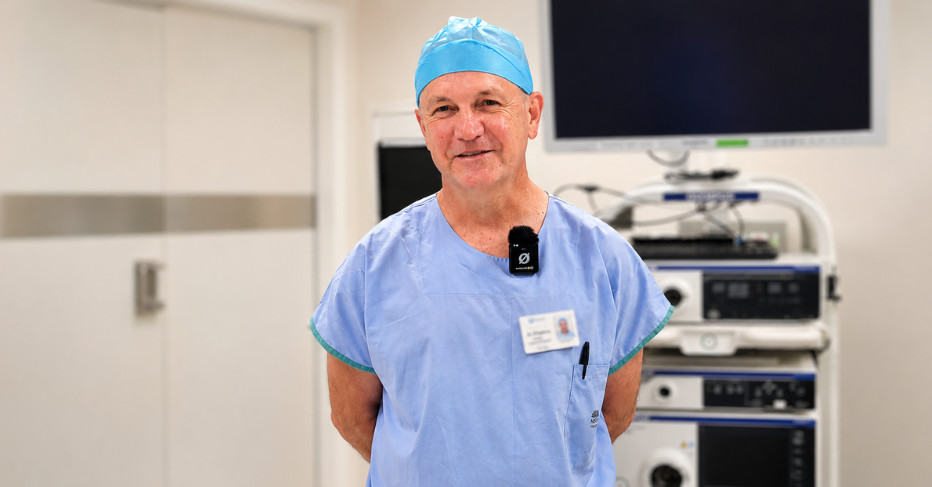
For Bowel Cancer Awareness Month, Professor Stephen Smith, Colorectal Surgeon and Professor of Surgical Oncology at Calvary Mater Newcastle, answers some of the most common questions about bowel cancer.
He discusses the importance of screening, emerging research, common symptoms and the lifestyle changes that can help reduce risk.
Q. Why is bowel cancer awareness so important?
Around one in 20 Australians will develop bowel cancer during their lifetime.
Almost everyone has a relative, friend or colleague who has been affected by bowel cancer. If you've seen someone diagnosed at a later stage, you'll understand the devastating impact it can have on individuals and families.
That's why research into preventing bowel cancer, diagnosing it earlier and improving treatment is so important. It's a community problem, and it's something we all need to work together to improve.
Q. What message would you most like the community to take away during Bowel Cancer Awareness Month?
The biggest message that still isn't getting through is simple: do your screening.
Every year, around 15,000 Australians are diagnosed with bowel cancer and approximately 5,000 people die from the disease.
The National Bowel Cancer Screening Program is saving lives by identifying cancers earlier and preventing cancers from developing in the first place. Yet only about half of eligible Australians complete the screening test when it arrives in the mail.
I often use this comparison: if you got into a car without wearing a seatbelt, most people would think that was reckless. But by leaving your bowel screening test sitting on the kitchen bench, you're potentially putting yourself at even greater risk.
Screening saves lives. The test is simple, free and could make all the difference.
Q. How is research helping improve bowel cancer screening?
One of the most exciting areas of research we're currently undertaking is looking at new ways to improve screening.
We're seeing increasing rates of bowel cancer in younger Australians. In fact, the rate of bowel cancer in people under 50 has doubled in recent years.
At Calvary Mater Newcastle, we're investigating a blood test that may be able to detect bowel cancer with a high degree of accuracy when compared with current stool-based screening tests.
If further research confirms its effectiveness, this type of test could encourage more people to participate in screening and may also make screening more accessible for younger people who currently fall outside routine screening programs.
We're studying how accurate the test is across the broader community, in high-risk patients and compared with the screening methods currently available.
Q. Why are you passionate about bowel cancer research?
I love what I do. I love helping people and treating colorectal cancer.
One of the reasons I chose colorectal surgery is that bowel cancer has a very high cure rate when it is detected and treated at the right time. Even when it's diagnosed later, surgery can often significantly improve a person's quality of life.
As my career progressed, I became increasingly passionate about finding better ways to treat and prevent bowel cancer.
I believe our responsibility is not only to provide the best available treatment for our current patients, but to ensure the next patient receives even better care. The only way we can achieve that is through research.
Our research focuses on improving surgical outcomes, reducing complications, helping patients recover faster and ensuring people who need additional treatments can access them without unnecessary delays.
Ultimately, the goal is to identify bowel cancer earlier and, ideally, prevent it from occurring at all.
For a colorectal surgeon, researching your way out of a job would probably be the ultimate achievement.
Q. How have bowel cancer treatment and prevention changed in recent years?
The biggest advances have come through screening.
Most people diagnosed with bowel cancer either don't realise they have symptoms or don't have symptoms at all in the early stages. Screening allows us to identify bowel cancer before symptoms develop, when it is easiest to treat and has the highest cure rates.
Importantly, screening doesn't just detect cancer — it can also identify polyps before they become cancerous.
We've seen almost a 50 per cent reduction in bowel cancer rates among people participating in screening programs, which is a remarkable achievement.
In terms of treatment, minimally invasive surgery has transformed care over the past two decades. Techniques such as laparoscopic and robotic surgery allow us to perform complex procedures with smaller incisions, helping patients recover more quickly.
There has also been significant progress in areas such as immunotherapy, which is becoming increasingly important for certain types of bowel cancer.
Q. What symptoms should people never ignore?
One of the challenges with bowel cancer is that many people don't have symptoms in the early stages, which is why screening is so important.
However, there are some warning signs that should always be investigated.
These include:
- Blood mixed through your bowel motions
- A persistent change in bowel habits
- New or ongoing abdominal pain
- Bloating or abdominal swelling
- Unexplained changes in digestive function
If you experience any of these symptoms, it's important to speak with your GP and ensure they are properly investigated.
Q. What lifestyle changes can help reduce the risk of bowel cancer?
There are several lifestyle factors that can help reduce your risk.
One of the most important is reducing your intake of processed meats such as bacon, salami, devon and other heavily processed meat products. Regular consumption has been linked to an increased risk of bowel cancer.
Reducing alcohol intake is also important, as alcohol is known to increase bowel cancer risk.
On the positive side, increasing your intake of vegetables, fruit, fibre and calcium-rich foods can help support bowel health and reduce risk.
Regular exercise is another key protective factor. I encourage people to aim for at least 30 minutes of physical activity three times a week.
Q. What is your key message for Bowel Cancer Awareness Month?
Don't ignore your screening test.
Bowel cancer is one of the few cancers we can actively prevent by identifying and removing pre-cancerous polyps before they become cancer.
The earlier bowel cancer is detected, the easier it is to treat and the better the outcomes are for patients.
If you're eligible for screening, complete the test. It could save your life.