August 18 2026
Calvary Health Care provides first test patient in the world for new Aquarius pilot study
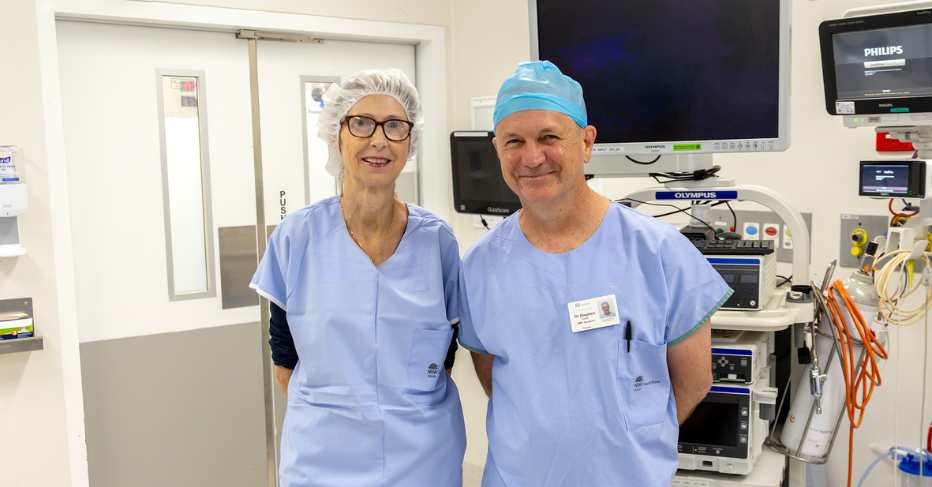
A new technology study launching at Calvary North Adelaide Hospital is offering fresh hope for people with overactive bladder and faecal incontinence.
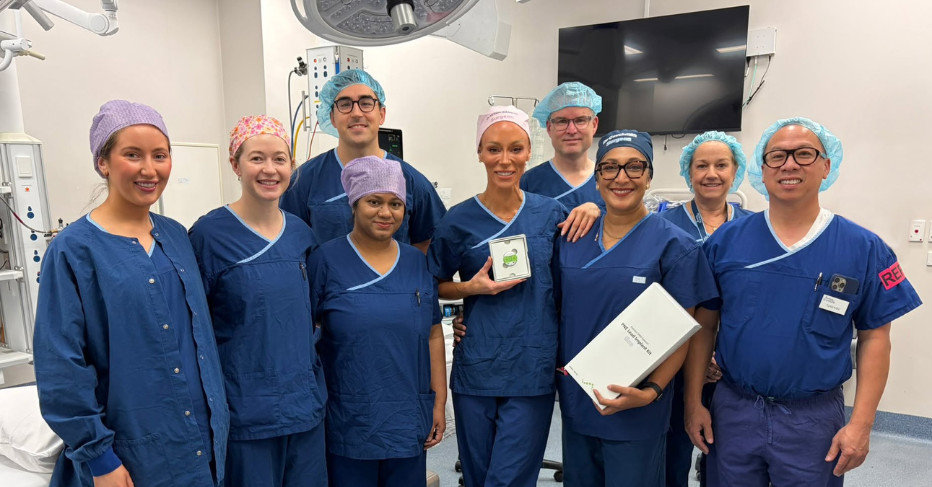
Led by Dr Ailsa Wilson Edwards in South Australia, the Aquarius Pilot Study aims to evaluate a novel external trial system for patients undergoing sacral neuromodulation* to address overactive bladder or faecal incontinence.
Improving the sacral neuromodulation trial experience
“The purpose of the study is to test an innovative stimulator plus a waterproof dressing, worn on the lower back, that allows the patient to shower and get wet, while they find out if this therapy works for them,” Dr Wilson Edwards said.
“Usually during the testing period we require there be at least one week of no showering, to avoid water exposure to the device. This study is about providing a product that can withstand daily life. Being able to shower and get on with life is so important for people with bladder and bowel problems.
“If we can solve this step to improve the patient’s experience, many more people can benefit from the science behind sacral neuromodulation.”
World-first participants at Calvary North Adelaide Hospital
The first study patient in the world underwent their procedure with Dr Ashani Couchman at Calvary North Adelaide Hospital on Friday 15 May, as part of the Australian, USA and Canadian trial for Boston Scientific using Axonics therapy**.
Together, Drs Couchman and Wilson Edwards have now completed the first 10 participants in the world through this international study.
How sacral neuromodulation works
According to Dr Couchman, sacral neuromodulation involves installing a transmitter targeting the nerves to the lower urinary tract, to provide some level of control.
“Urinary or faecal continence issues are usually caused by abnormal communication between the brain and bladder or bowel,” she said.
“Normally the brain sends nerve signals to empty your bladder and bowel as they fill, respectively.
“Sacral neuromodulation uses a miniature implant to provide gentle stimulation to the nerves that control the bladder and bowel, allowing the patient to take back some control. The transmitter can help restore normal communication from the brain, resulting in an improvement of symptoms,” she said.
About the Aquarius Pilot Study
- The formal title of the study is: Protocol 105-0179: Prospective, Multicenter, Single Arm Study of the Axonics External Trial System (Model ETS-02) – The AQUARIUS Pilot Study.
- *Neuromodulation is the process of altering nerve activity, either naturally through chemical signals or therapeutically via targeted interventions, to regulate neural circuits and influence physiological or clinical outcomes.
- **Axonics therapy is designed for people with overactive bladder and bowel incontinence by stimulating the sacral nerves near the base of the spine.