Calvary Health Care

ContactDonate
    • Search all hospitals
    • About our hospitals
    • Clinical safety & quality
    • Information for doctors
    • Palliative and end of life care
    • Calvary's response to Voluntary Assisted Dying (VAD)
    • CalvaryCare app
    • Volunteer
    • Search all Residential Aged Care homes
    • About Residential Aged & Respite Care
    • Book a tour
    • Accessing aged care
    • Understanding aged care fees
    • Our PEARS model of care
    • Calvary's response to Voluntary Assisted Dying (VAD)
    • The new Aged Care Act
    • Search all Retirement Communities
    • About Retirement Living
    • Understanding costs
    • Frequently asked questions
    • Book a tour
    • Make an enquiry
    • About Home Care
    • Support at Home
    • All Home Care services
    • Pricing and fees
    • Switch providers
    • Support for carers
    • Home Care resources
    • Service centre locations
    • Search all current vacancies
    • About Calvary careers
    • Employee benefits
    • Graduate Nurse Transition Program
    • Travelling Workforce Program
    • Refugee Mentoring Program
    • Search all news
    • Upcoming events and seminars
    • Media enquiries
    • About Calvary
    • Our heritage story
    • Mission & Values
    • Strategy
    • People and leadership
    • Environmental, social and governance
    • Clinical safety and quality
    • Privacy and policies
    • Annual reviews
    • Research
    • Palliative and end of life care
    • Calvary's response to Voluntary Assisted Dying (VAD)
    • I Am Living
    • Reconciliation
    • Volunteer at Calvary
  • ContactDonate

Calvary Health Care

Calvary acknowledges the Traditional Custodians and Owners of the lands on which all our services operate. We recognise that these Custodians have walked upon and cared for these lands for thousands of years. We acknowledge the continued deep spiritual attachment and relationship of First Nations peoples to this country and commit ourselves to the ongoing journey of Reconciliation.
XLinkedinFacebookYoutubeInstagram
Our services
  • Hospitals
  • Residential Aged & Respite Care
  • Retirement Living
  • Home Care
About Calvary
  • About us
  • Heritage
  • Mission & Values
  • Research
Support
  • Contact
  • Media enquiries
  • Privacy and policies

  • Site map
  • About this website
© Little Company of Mary Health Care Ltd. 2026
  • home page
  • News and Events..
  • News..
  • Celebrating 40 Years of the Hunter Area Toxicology Service
November 4 2026

Celebrating 40 Years of the Hunter Area Toxicology Service

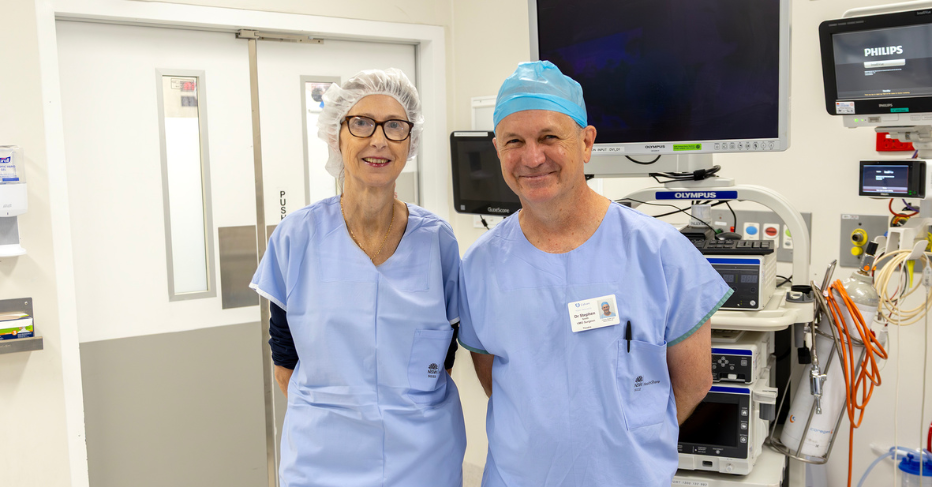
On Thursday 24 September, the Hunter Area Toxicology Service (HATS) marked an extraordinary milestone, celebrating 40 years of innovation, research and excellence in patient care with a special Research Symposium at Calvary Mater Newcastle.
IMG 0927
The event brought together staff, researchers and clinicians to reflect on four decades of achievement and hear from leading figures in toxicology, psychiatry and clinical research, including Professor Ian Whyte, Professor Gregory Carter, Professor Geoff Isbister and Professor Andrew Dawson.
The global legacy of the hospital’s research was fundamentally shaped by the foundational work of Professors Ian Whyte, Andrew Dawson, and Greg Carter. In 1987, Professor Whyte co-founded HATS and established a comprehensive patient case register that became the foundation for decades of rigorous clinical trial data.
Working alongside Professor Whyte, Professor Dawson expanded the department's public health footprint, utilising HATS data to pioneer global models of care, trace early drug-toxicity signals, and influence international chemical safety regulations.
Recognising the critical intersection between acute self-poisoning and mental health, Professor Carter integrated a specialised consultation-liaison psychiatry service into HATS in 1995. Together, the trio collaborated on revolutionary psychiatric-toxicological interventions, most notably the internationally acclaimed "Postcards from the EDge" project - a landmark randomised controlled trial that demonstrated how a simple, non-obligatory postcard intervention drastically reduced repetitions of deliberate self-poisoning.
This strong foundation paved the way for the Mater's dedicated Clinical Toxicology Research Group, working in partnership with the University of Newcastle, to consistently deliver high-impact studies that redefine global medical guidelines.
Today, under the leadership of Professor Geoff Isbister, the department hosts critical multicentre initiatives like the Australian Snakebite Project (ASP) and the Australian Toxicology Monitoring (ATM) study. Notably, it features one of the few specialised laboratories globally capable of measuring precise venom and antivenom concentrations.
Through four decades of continuous investigation into paracetamol poisoning, drug-induced cardiotoxicity, behaviourally disturbed adult care, and envenomation treatments, the Mater has seamlessly unified pharmacology and mental health to drastically optimise patient outcomes worldwide.
Congratulations to HATS on this remarkable milestone.

More like this...

September 8 2026
A career dedicated to improving cancer care
At the end of August, Calvary Mater Newcastle farewelled Madhu Garg, Analytical Biologist, after more than 33 years of dedicated service to cancer research.
August 18 2026
Palliative care pharmacists making a difference across generations
Palliative care focuses on improving the quality of life for people with serious illness. It supports not just physical symptoms, but also emotional, social and spiritual needs.
June 29 2026
Calvary Mater Newcastle advancing bowel cancer research and early detection
A novel blood test for the earlier diagnosis of bowel cancer is just one of the new approaches the Calvary Mater Newcastle’s Bowel Cancer Research Program is investigating in its efforts to lead advances in early detection, treatment and survivorship care.
View all