June 3 2026
Calvary Mater Newcastle recognised nationally for advancing safer breast cancer radiotherapy
Calvary Mater Newcastle has been recognised for pioneering a world-first breast cancer radiotherapy system that improves treatment precision and patient safety.
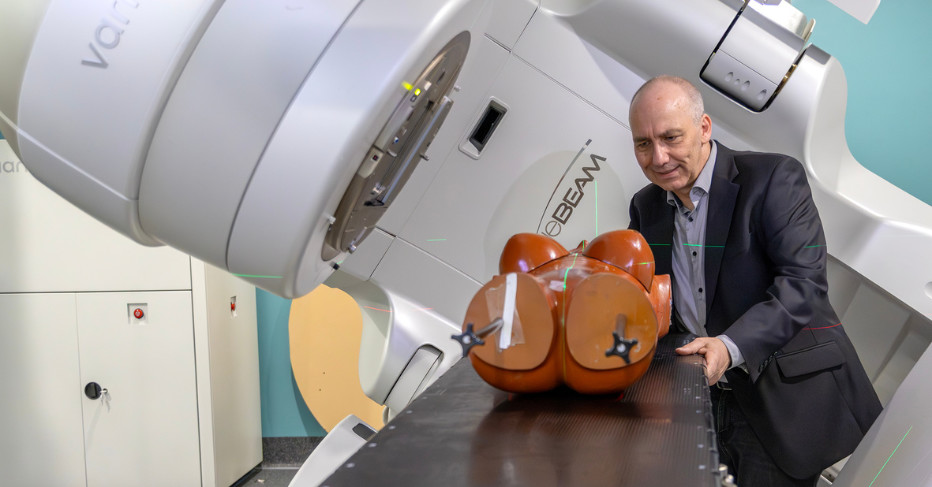
A team led by Professor Joerg Lehmann, Principal Medical Physicist, Department of Radiation Oncology, Calvary Mater Newcastle has been selected for the National Health and Medical Research Council’s (NHMRC) 10 of the Best 2026, a prestigious recognition highlighting outstanding NHMRC-funded research.
This 17th edition of 10 of the Best recognises outstanding NHMRC-funded research completed in 2023 and highlights work that has made a significant contribution to the health and wellbeing of Australians.
The research, which was administered through the University of Newcastle was titled, ‘First ever system to continuously and directly measure the internal anatomy to guide breast cancer radiation treatment under deep inspiration breath hold’.
Breast cancer is the second most commonly diagnosed cancer in Australia, with more than 50 per cent of patients receiving radiation therapy as part of their treatment*.
Improving the safety and effectiveness of this treatment has been a central focus of Professor Lehmann’s work.
A central challenge in breast radiotherapy is minimising unintended radiation exposure to the heart. “Radiation therapy for breast cancer can unintentionally affect the heart because of its proximity to the treatment area, increasing the risk of major coronary events. My question was: how can we reduce that risk?”, said Professor Lehmann.
To address this, the team advanced the use of deep inspiration breath hold (DIBH), a technique that increases the distance between the heart and the treatment field and reduces radiation dose to the heart.
Critically, the researchers overcame a key limitation of existing approaches by developing a method to directly monitor internal anatomy in real time, rather than relying on external surrogate measures.
This innovation enables clinicians to confirm that patients maintain the correct breath-hold position throughout treatment, ensuring accurate dose delivery to the target tissue.
“The increased precision allows radiation to be more accurately targeted to breast tissue, reducing the risk of long-term cardiac complications and improving patient safety. It also supports the safe implementation of shorter treatment courses,” Professor Lehmann said.