Calvary Health Care

ContactDonate
    • Search all hospitals
    • About our hospitals
    • Clinical safety & quality
    • Information for doctors
    • Palliative and end of life care
    • Calvary's response to Voluntary Assisted Dying (VAD)
    • CalvaryCare app
    • Volunteer
    • Search all Residential Aged Care homes
    • About Residential Aged & Respite Care
    • Book a tour
    • Accessing aged care
    • Understanding aged care fees
    • Our PEARS model of care
    • Calvary's response to Voluntary Assisted Dying (VAD)
    • The new Aged Care Act
    • Search all Retirement Communities
    • About Retirement Living
    • Understanding costs
    • Frequently asked questions
    • Book a tour
    • Make an enquiry
    • About Home Care
    • Support at Home
    • All Home Care services
    • Pricing and fees
    • Switch providers
    • Support for carers
    • Home Care resources
    • Service centre locations
    • Search all current vacancies
    • About Calvary careers
    • Employee benefits
    • Graduate Nurse Transition Program
    • Travelling Workforce Program
    • Refugee Mentoring Program
    • Search all news
    • Upcoming events and seminars
    • Media enquiries
    • About Calvary
    • Our heritage story
    • Mission & Values
    • Strategy
    • People and leadership
    • Environmental, social and governance
    • Clinical safety and quality
    • Privacy and policies
    • Annual reviews
    • Research
    • Palliative and end of life care
    • Calvary's response to Voluntary Assisted Dying (VAD)
    • I Am Living
    • Reconciliation
    • Volunteer at Calvary
  • ContactDonate

Calvary Health Care

Calvary acknowledges the Traditional Custodians and Owners of the lands on which all our services operate. We recognise that these Custodians have walked upon and cared for these lands for thousands of years. We acknowledge the continued deep spiritual attachment and relationship of First Nations peoples to this country and commit ourselves to the ongoing journey of Reconciliation.
XLinkedinFacebookYoutubeInstagram
Our services
  • Hospitals
  • Residential Aged & Respite Care
  • Retirement Living
  • Home Care
About Calvary
  • About us
  • Heritage
  • Mission & Values
  • Research
Support
  • Contact
  • Media enquiries
  • Privacy and policies

  • Site map
  • About this website
© Little Company of Mary Health Care Ltd. 2026
  • home page
  • News and Events..
  • News..
  • Commonly Asked Questions | Breastfeeding Week
August 2 2025

Commonly Asked Questions | Breastfeeding Week

World Breastfeeding Week aims to raise awareness about the importance of breastfeeding and the benefits. This year’s theme is ‘Prioritise Breastfeeding: Create sustainable support systems’ encourages communities to come together and support breastfeeding mothers.
news-main image-breast cancer-q-a
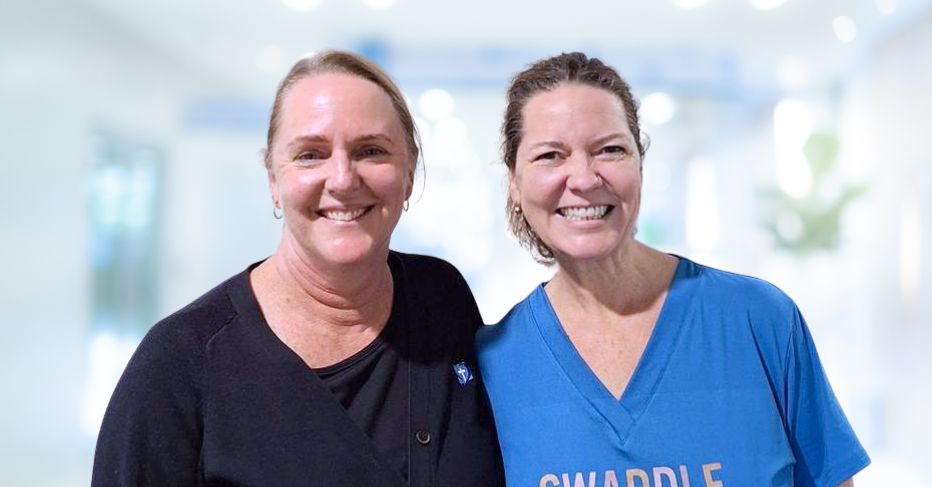
Calvary Riverina Hospital Acting Nurse Unit Manager, Jody Fellows, and Midwife Vicky Fayle, support new mothers in the first few days of their breastfeeding journey. They recently sat down to answer some commonly asked questions about breastfeeding and the varying experiences of new mothers.

Q. What is the first thing you say to a new mother when they’re beginning their breastfeeding journey?

It is really important for new mums to know that everyone’s baby is different and that each breastfeeding journey is unique.
Everyone will go through ups and downs, so don’t be hard on yourself. Surround yourself with a good support network and reach out if you’re struggling.

Q. What do you teach mums about breastfeeding when they’re in your care?

Breastfeeding should be a positive bonding time between mother and baby. What we say to new mums is to follow your baby’s cues and breastfeed on demand.
It is also important to establish a comfortable attachment and position to ensure a good breastfeeding experience for both mum and baby. That is something we work on with new mums when they’re in our care.

Q. What are the benefits of breastfeeding and how long should a baby be breastfed?

There are many benefits with breastfeeding. It helps boost a baby’s immune system and provides optimal nutrition for easier digestion by baby. It is also easy, accessible and financially sound. The bond it creates between mum and baby is also a huge benefit.
The recommendation from the World Health Organisation is to breastfeed exclusively for the first six months of a baby’s life and then to breastfeed alongside the introduction of solid foods for at least 12 months.

Q. If a mother is unable to breastfeed, what advice would you give them?

As a new mum, it is so important to have a good support network in place. If someone’s breastfeeding journey isn’t going well it is important for them to have family or friends they can talk to about the experience. There is also professional support available if you’re struggling.
New mums are provided lactation support when they’re in our care, and additional support is still available once you leave the hospital. To find out what support is available to you or to simply seek advice, you can call the Breastfeeding Helpline on 1800 686 268.
Nurturing that mother and baby bond is so important. If you are unable to breastfeed, we still encourage skin-to-skin time.
Don’t be hard on yourself about it not working out as planned. You can still express your milk and bottle feed, and formula feeding is a good alternative. What is most important is to be patient with yourself and love your baby.

Q. We know that everyone’s breastfeeding journey is different. As a community, how do we support new mums through the challenges they may face?

If you have a friend or a loved one who is on their breastfeeding journey, just be there for them. Everyone goes through ups and downs and having a good support network is very important.
As a community, we need to make sure new mothers feel welcome and supported in public. That includes having breastfeeding-friendly spaces in our community and in the workplace.
For more information, resources and support, visit breastfeeding.asn.au.

More like this...

September 22 2023
Commonly Asked Questions | Dementia
The 2023 theme for Dementia Action Week is Act Now for a Dementia-Friendly Future. It’s a sentiment close to the heart for Calvary Health Care Geriatrician and General Physician, Dr Mary Ann Kulh, who is a firm believer in the power of a supportive environment for a person living with dementia, and their carers.
September 24 2025
Commonly Asked Questions | Prostate cancer
Nearly 72 Australian men are diagnosed every day with prostate cancer, making it the nation’s most commonly diagnosed cancer, according to Prostate Cancer Foundation of Australia (PCFA). However, 95.8% of men diagnosed with prostate cancer will survive for at least five years and 91% will live more than 10 years thanks to significant advances in research and treatment.
November 14 2023
Commonly Asked Questions | Cleft lip and palate
Between the 8th and 14th of November, Craniofacial Australia and other associated Australian charities are raising awareness of cleft lip and palate treatment.
View all