May 10 2026
Commonly Asked Questions | Palliative care
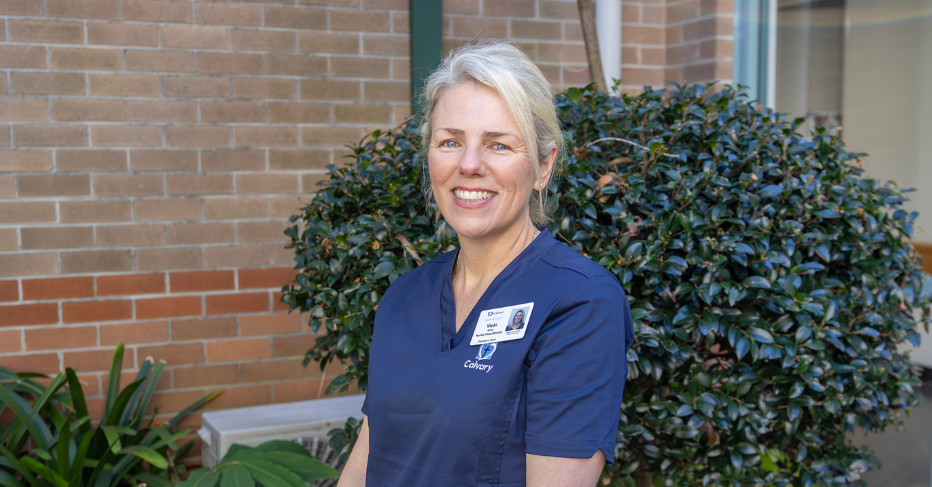
In this Q&A, Vicki Gray, Nurse Practitioner at Calvary Mater Newcastle shares insights from her 15 years in palliative care.
Vicki explores what palliative care really looks like in practice, challenges common misconceptions, and highlights the importance of early conversations and holistic support. She also offers a compassionate perspective on helping patients live well with life-limiting illness while supporting families through some of life’s most vulnerable moments.
Q. What does palliative care look like in practice?
Palliative care is often considered a sad area of nursing to work in. It is, however, a privilege to be involved with patients and their families when they are at their most vulnerable, navigating a life-limiting illness.
The palliative care team consists of doctors, nurses, allied health and volunteers. The team works together to improve a person’s quality of life in a safe and comfortable environment by offering symptom management and emotional support.
Care may be provided in the home, hospital or hospice, and sometimes all these places at different times depending on the patients’ wishes.
Q. What is the most surprising thing about palliative care?
The most surprising thing about palliative care is that people may still be receiving active treatment such as chemotherapy when they are referred. Research has demonstrated that people may live longer or have improved quality of life if they are referred early.
Q. What is the most common misconception about palliative care?
The most common misconception about palliative care is that all people die with pain or suffering. The reality is that patients generally become more fatigued in the last days of life, and their awareness of surroundings and physical needs decrease.
Another misconception is that palliative care is 'looking after dying patients', when the team is caring for patients who are 'living' with a life-limiting illness.
Q. What are some common myths, and what’s the reality?
There are many myths about palliative care including:
- Injectable medications or infusions hasten death. The reality is that patients require injectable medications or infusions because they are dying and their ability to swallow tablets becomes unsafe. They still require pain relief and the safest way to administer medication is by injection or infusion.
- As a patient nears death they may develop a noisy breathing pattern. This is often mistaken as 'drowning'. The gurgling sound is air moving across secretions in the back of the throat. It is much like snoring in that the person sleeping is oblivious to the noise but those listening may be quite disturbed by it. It is not a sign of suffering or discomfort.
- Death is frightening. It is generally very peaceful. When death is near, patients often look to be asleep, then their breathing changes, and then ceases. Sometimes those present do not actually realise their family member has died.
- Pain is the symptom that patients fear most. Fatigue is commonly the symptom that patients find the most difficult to live with.
Q. How does palliative care support families as well as patients?
Palliative care supports patients by listening attentively to what is important to them and facilitating their wishes where possible. Much of what we do is demystify and provide education around the dying process, along with holistic comfort care. Families are assisted with decision-making, emotional support and bereavement care.
Q. Why is it important to start conversations early?
Starting end-of-life conversations early can make the dying process much smoother for all involved. An Advanced Care Directive (ACD) is helpful in guiding people to consider what is important to them, especially if they lose decision-making capacity in the future.
It also provides guidance for health professional as well as family members who may have different values and beliefs to each other.
Q. What does ‘living well’ mean in a palliative care context?
'Living well' is having optimal symptom management for pain, nausea, fatigue and other symptoms, as well as having psycho-spiritual support.
Palliative care explores what is most important and meaningful to the person and focuses on enabling their wishes to be fulfilled.
Q. What do you find most meaningful about working in this space?
I love working in palliative care as it offers the opportunity to make a genuine difference at a time when people are at their most vulnerable and needing compassionate care. It is the small acts of kindness that make all the difference. I feel privileged to work as a member of a highly skilled multidisciplinary team of professional where the focus is on dignity, respect and integrity.
Death is becoming a less taboo topic of discussion. During my time in palliative care, I have noticed that as a society we are more at ease with death and personalising the experience whether it be breaking with taboos or contemplating what we would like for ourselves.
It is such an honour to care for people and support their loved ones. There is a profound sense of trust, commitment and compassion with all involved.