May 13 2026
Finding strength, laughter and independence: Alan’s story at the Active Palliative Gym
Movement, connection and care come together at the Active Palliative Gym at Calvary Health Care Bethlehem, where patients living with life-limiting illness are building strength, confidence and community.
For people living with life-limiting illness, maintaining independence, confidence and connection can feel increasingly out of reach.
At Calvary Health Care Bethlehem’s Active Palliative Gym, however, community patients are discovering that movement, support and laughter can be just as powerful as medicine and can enhance quality of life while supporting both physical and emotional wellbeing.
For Alan Laver, joining the gym was first recommended as part of his pain management and mental health care. Eighteen months later, the impact has been profound.
“I was recommended to join the gym for pain management and depression,” Alan says. “It has helped me enormously, both mentally and physically.”
What began as a clinical referral soon became a cornerstone of Alan’s weekly routine.
The Active Palliative Gym is part of Calvary Health Care Bethlehem’s specialist palliative care services, which take a multidisciplinary approach to support patients physically, emotionally, socially and spiritually.
Through tailored exercise programs designed specifically for people with life-limiting illness, the gym’s focus is not on pushing limits, but on preserving independence, autonomy and confidence, supporting each person to live as well as possible on their own terms.
Since starting at the gym, Alan has experienced physical improvements he once thought unlikely.
“I’ve become pain free, and I have a lot more confidence,” he says. “My balance has improved by about 80%. I was using a walker 18 months ago, now I hardly need my stick.”
Just as important as physical gain is how Alan feels emotionally after each session.
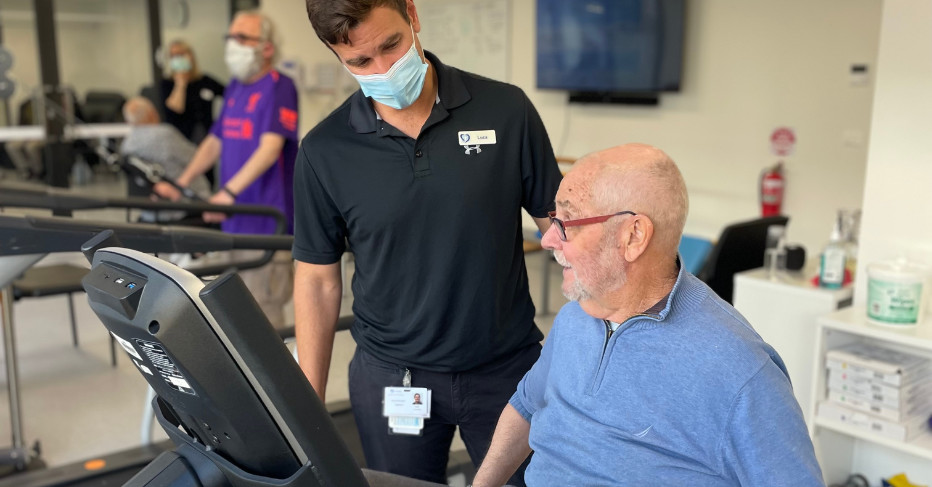
“I feel very happy after a workout,” he says. “We have so many laughs, especially with Luca taking the Mickey out of me.”
That laughter is no accident. The Active Palliative Gym is intentionally designed as a social space, where people can connect with others who understand the challenges of living with serious illness without judgement or pressure, helping to reduce isolation and build a strong sense of community.
“Yes, I’ve met people who make it more fun,” Alan shares. “Julie and I always have coffee after the gym; we laugh and gossip.”
For many participants, these connections are as meaningful as the exercises themselves.
The gym provides a safe, uplifting environment where illness does not dominate the conversation and where people are seen for who they are, not just their diagnosis, supporting emotional resilience and a sense of belonging.
Alan speaks warmly about the atmosphere created by staff and volunteers, singling out physiotherapist Luca and volunteers Maree and JC.
“How kind and gentle Luca is with everyone, I cannot praise him enough,” Alan says. “With Maree volunteering and JC, the mood is always uplifting. The music, the laughs, every session.”
That culture of care translates directly into confidence and independence beyond the gym, helping people maintain dignity and control in their day-to-day lives.
“The exercise has made me a lot more confident,” Alan explains. “I stay happy and positive; it helps with the day-to-day stuff.”
When asked what he would say to someone unsure about joining the gym, Alan doesn’t hesitate.
“I’d tell them, run, don’t walk,” he says. “I’ve witnessed so many happy and positive results. We don’t just go for exercise; we look forward to it for the company.”
Alan’s story reflects the heart of the Active Palliative Gym: a place where movement supports dignity, community fosters resilience, and people living with life-limiting illness, along with their families and carers, can rediscover joy, strength and independence together.
It highlights the vital role of palliative care in supporting not just patients, but the whole person during every stage of their journey.